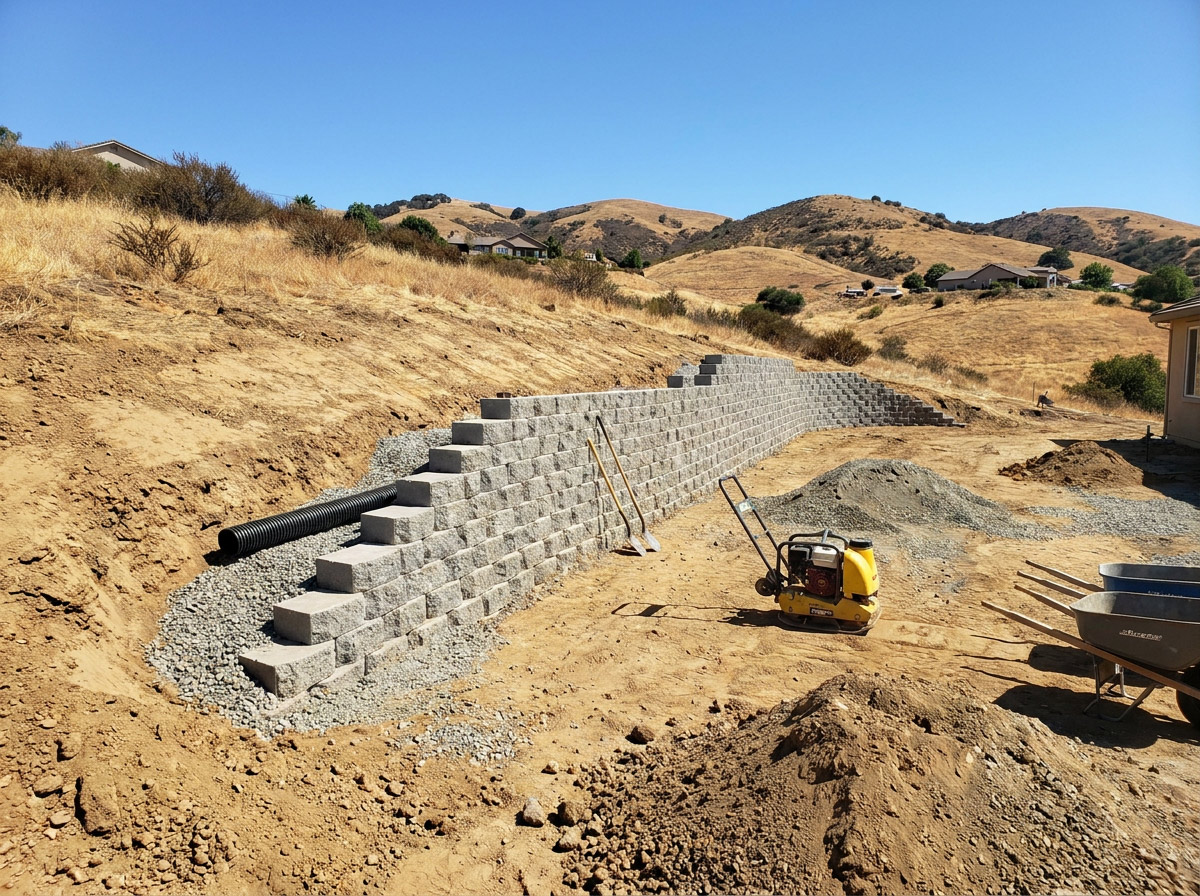
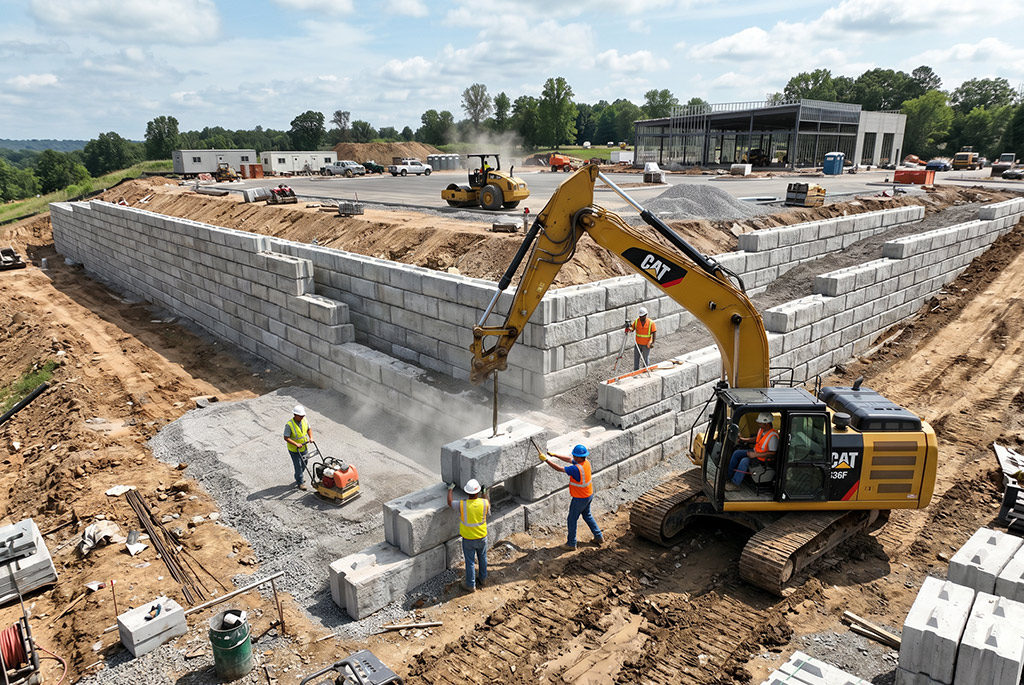
Summer is go-time for commercial foundation work, and if you’ve been in this trade as long as we have, you already know why. The ground is dry, the calendar is open, and the rain that stalls a Bay Area jobsite from November through April is finally out of the picture. But peak pour season comes with its own headaches — and heat is the biggest one. After 25+ years pouring commercial footings and slabs from Sonoma down to Santa Clara, here’s how we think about getting foundations right when the mercury climbs.
This one’s written contractor to contractor. No sales pitch — just what we’ve learned holding a screed in 95-degree heat.
Why Summer Is the Window (and the Trap)
The dry months are when we do most of our commercial foundation volume, and for good reason. Excavation stays stable, subgrade holds compaction, and you’re not fighting mud or pumping out footing trenches every morning. Scheduling inspectors is easier, concrete suppliers are running full shifts, and you can actually hold a pour date.
The trap is that everyone’s booked solid. Redi-mix plants get slammed, pump trucks are spoken for weeks out, and the heat that makes the site workable also works against your concrete the second it leaves the chute. Plan like it’s a busy season, because it is.
Site Prep: Don’t Skip the Boring Stuff
Hot, dry summer soil looks like a dream to work with — until you realize how fast it pulls moisture out of everything, including your subgrade and your concrete.
- Compact to spec, verify it, document it. Dry soil can look compacted and still be loose below the surface. Get your densities checked before you set a single form.
- Dampen the subgrade before you pour. A bone-dry base wicks water straight out of the bottom of your slab, which is exactly where you don’t want to lose it. Fog it down ahead of the trucks — don’t leave standing water, just knock the dust and thirst out of it.
- Watch your grading and drainage now. It’s dry today, but you’re building for the wet season. Proper slope away from the structure and correct footing depth are a lot cheaper to get right before the concrete’s in than after.
Rebar in the Heat — Mind the Steel
Here’s one guys forget: rebar sitting in direct summer sun gets hot enough to accelerate the set of the concrete around it and cook off surface moisture at the bar. On a big commercial mat or grade beam, that matters.
Keep your steel shaded or staged out of direct sun until placement when you can, and on brutal days, a light misting of the rebar and forms right before the pour keeps everything from flash-drying at the contact points. Double-check your cover and chair spacing too — it’s easy to rush placement when the crew’s trying to beat the heat.
Mix and Curing: Where Summer Pours Are Won or Lost
This is the part that separates a clean pour from a cracked, dusty slab. Heat speeds up hydration, which means faster slump loss, shorter working time, and a much higher risk of plastic shrinkage cracking.
- Talk mix design with your supplier up front. Retarders, a slump adjustment, or a hot-weather admixture package can buy you the working time you need. Ask about mix temperature — chilled water or ice on the ticket is worth it on the hottest days.
- Pour early. First light, before the ambient temp and the concrete temp climb. We’d rather start at 5 a.m. than fight a slab at 1 p.m.
- Never add water on site to fix slump. It’s tempting when the load’s stiffening up, but you’re trading workability for strength and cracking. Handle it with the mix design, not the hose.
- Have your curing plan staged before the pour, not after. Evaporation retarder, wet burlap, curing blankets, or a spray membrane — whatever your spec calls for, it needs to hit the surface fast. In dry Bay Area summer air with any wind, plastic shrinkage cracks show up within the first hour if you’re not covering.
- Keep it wet and keep it covered. Moist curing for the first several days is what buys you the strength and durability the engineer designed for. Don’t let a Friday pour dry out over the weekend.
Inspections and Scheduling: Protect Your Dates
Inspectors and material suppliers are both stretched thin in summer. Book your rebar and formwork inspection well ahead, and build a buffer — a failed or bumped inspection can blow your whole pour window when the pump truck is only available on one day.
Sequence your work so you’re not waiting on a hot afternoon delivery. Confirm truck spacing with the plant so loads arrive steady, not all at once or with big gaps that let the placed concrete get ahead of you.
The Mistakes We See Most in July
- Pouring in the afternoon heat “to save a day” and paying for it with cracking.
- Adding water at the chute.
- Skipping subgrade dampening because the site “looked fine.”
- No curing materials staged, so the surface dries before anyone covers it.
- Underestimating how fast a summer load loses slump on a long haul across the Bay.
Build It Right the First Time
A foundation is the one part of the job you can’t come back and fix easily — it’s carrying everything above it for decades. Summer gives us the best conditions to get commercial foundations in the ground, but only if you respect what the heat does to concrete and plan around it.
If you’re an architect, engineer, or GC lining up commercial foundation work across the Bay Area this season and want a crew that treats the pour like it matters, that’s what we do at Saribalis Construction. Owner-operated, 25+ years, and we’ll honestly evaluate the structure and give you a straight answer. Give us a call and let’s talk through your project before the summer calendar fills up.