A retaining wall can look rock-solid from the front and still be failing behind the scenes. In most cases, the real threat isn’t the soil the wall is holding back—it’s the water trapped in it.
Proper drainage behind a retaining wall isn’t a “nice-to-have.” It’s what keeps the wall stable, prevents costly repairs, and helps your landscape survive heavy rain season after season.
Why drainage matters so much
Retaining walls are built to resist lateral pressure from soil. When that soil becomes saturated, the pressure on the wall increases dramatically because:
- Water adds hydrostatic pressure (force pushing sideways on the wall)
- Wet soil weighs more than dry soil
- Saturated soil can lose strength, making it more likely to shift
Without a way for water to escape, pressure builds until the wall starts to move—often suddenly.
What happens when drainage is missing or fails
Poor drainage is one of the most common causes of retaining wall damage and collapse. Here’s what it can lead to:
- Bulging or bowing in the middle of the wall
- Leaning forward (the top tilts outward)
- Cracked blocks, mortar, or concrete
- Separation at joints or “stair-step” shifting
- Erosion and washout at the base
- Soil sinkholes or depressions behind the wall
In other words: a drainage problem often shows up as a structural problem.
The key components of proper retaining wall drainage
Drainage systems vary by wall type and site conditions, but most well-built retaining walls include a combination of the following.
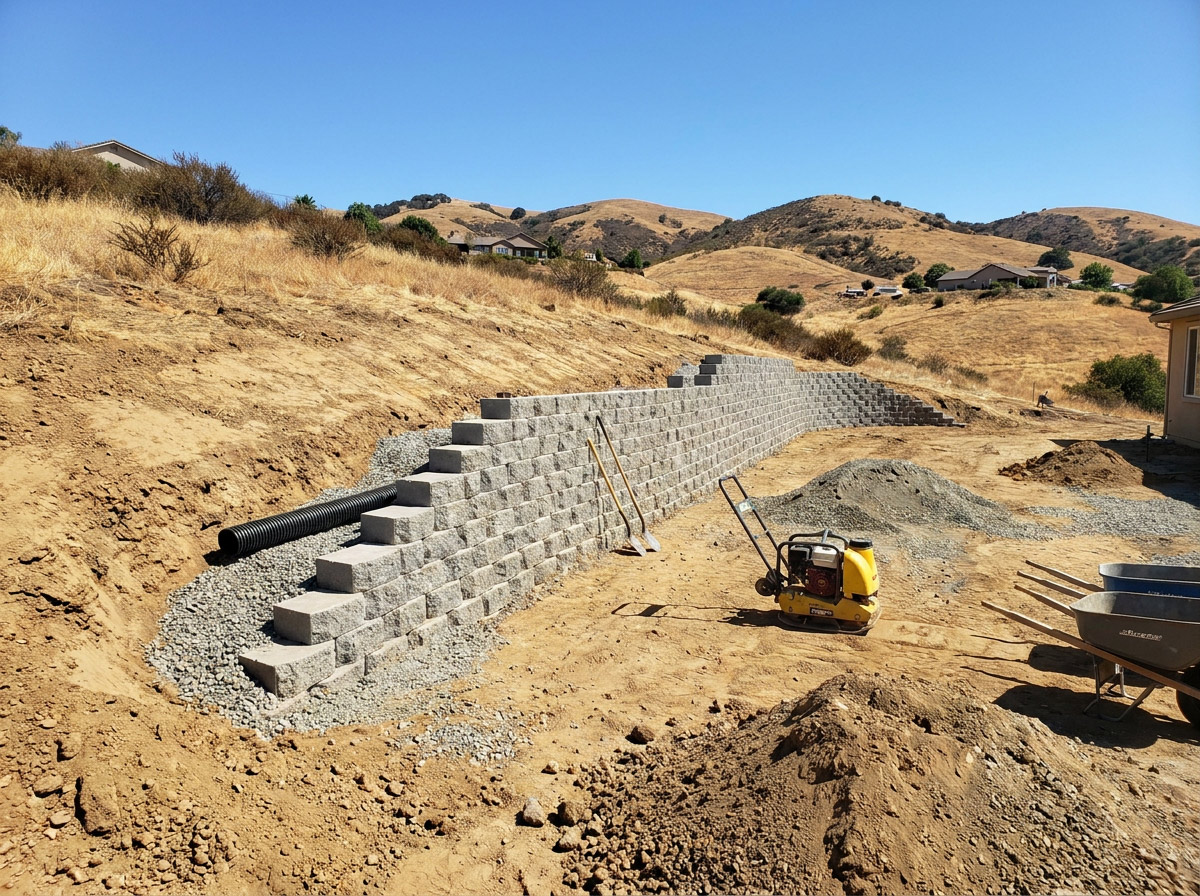
1. Free-draining backfill (gravel)
Instead of packing the entire area behind the wall with native soil (which holds water), contractors typically place clean gravel directly behind the wall. Gravel:
- Allows water to move quickly downward
- Reduces pressure buildup
- Helps keep fine soils from clogging drainage systems
2. Filter fabric (geotextile)
Filter fabric helps keep soil from migrating into the gravel and clogging it over time. It’s especially important in clay-heavy areas.
3. Perforated drain pipe (“French drain” behind the wall)
A perforated pipe installed at the base of the wall collects water and moves it away to a safe discharge point.
Important details that matter:
- Proper slope so water actually flows
- Correct outlet location (not dumping where it causes erosion)
- Cleanouts when possible for maintenance
4. Weep holes (for certain wall designs)
Weep holes are openings through the wall that let water escape. They can be helpful, but they’re not a complete drainage plan on their own—especially if the backfill behind them isn’t designed to drain.
5. Surface water control above the wall
Even the best behind-the-wall drainage can be overwhelmed if surface runoff is pouring into the area. Good sites often include:
- Proper grading so water flows away
- Downspout extensions
- Swales or surface drains
- Caps or top treatments that reduce water infiltration
Warning signs your retaining wall drainage isn’t working
After rain (or during a wet season), look for:
- Water pooling near the top of the wall
- Weep holes that never drain (or drain only mud)
- Staining or mineral deposits on the wall face
- Soft, soggy ground behind the wall that doesn’t dry out
- New bulges, leaning, or cracking
- Erosion at the base or soil washing out
If you see movement plus water issues, don’t wait—retaining wall failures can accelerate quickly.
“Can I just add drainage later?”
Sometimes, yes—but it depends on the wall type, height, and how far the problem has progressed.
- If the wall is still straight and stable, adding surface drainage improvements or installing a drain system may help.
- If the wall is already bulging, leaning, or cracking, drainage alone may not be enough. The wall may need reinforcement or rebuilding to restore structural integrity.
A professional assessment can tell you whether you’re dealing with a drainage upgrade—or a safety issue.
Maintenance tips to keep drainage working
Even a well-designed system can fail if it gets clogged or overwhelmed. A few simple habits help:
- Keep gutters and downspouts clear and extended away from the wall
- Avoid piling mulch/soil against the wall face where it can block weep holes
- Watch for sediment buildup at drain outlets
- Inspect the wall after major storms and each wet season
Final thoughts
Retaining walls don’t usually fail because they’re “weak.” They fail because water turns manageable soil pressure into a force the wall was never meant to hold.
If you’re building a new retaining wall, insist on a real drainage plan—not just a nice-looking front. And if you already have a wall, treat water pooling, clogged weep holes, and early movement as urgent warning signs.
If you want, tell me what type of wall you have (block, poured concrete, timber, stone), roughly how tall it is, and whether you’re seeing pooling water or leaning—I can help you add a quick “what to do next” section tailored to your situation.